 elmateco
When Argentina arrived in Kansas City as the reigning World Cup champions, their fans didn’t just bring flags and jerseys — they brought mate gourds and bombillas. According to a June 2026 Associated Press report, supporters gathered outside the team’s hotel, pouring and sharing yerba mate together as they welcomed the squad, turning a quiet ritual into a very public celebration.
A Tradition on Display in the US
At Cafe Corazon, one of the Midwest’s biggest yerba mate importers, lines of fans in sky-blue-and-white jerseys stretched out the door the day before Argentina’s first match — many of them Argentinians craving a taste of home, but plenty of curious newcomers too. It’s the kind of scene that’s becoming more common as the World Cup brings fans from mate-drinking countries like Argentina, Uruguay, Paraguay, and Brazil together on American soil, introducing the tradition to an entirely new audience.
The Stars Who Drink It
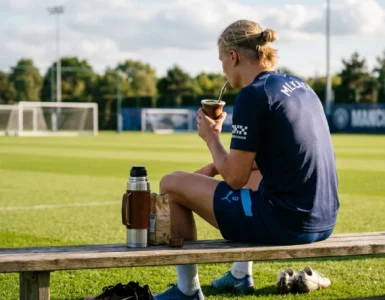
Yerba mate has long been part of football culture at the highest level. Lionel Messi famously held a mate gourd in one hand and the World Cup trophy in the other after Argentina’s 2022 win, cementing the drink’s place among the most recognizable sports beverages in the world. Uruguay’s Luis Suárez is another well-known regular. This isn’t the first time mate has crossed over into football culture beyond South America, either — a few years earlier, several England players picked up the habit themselves during their time under Argentine coach Mauricio Pochettino.
More Than Just a Drink
For many fans, sharing mate at a match or a watch party isn’t just about the taste — it’s a way of connecting. As one Argentina supporter cheering on the team in Kansas City put it, mate is “not only a drink, but a social thing.” The ritual of passing a single gourd from person to person, refilled and shared, mirrors the atmosphere of the World Cup itself: a shared experience built on community rather than individual enjoyment.
One Drink, Many Traditions
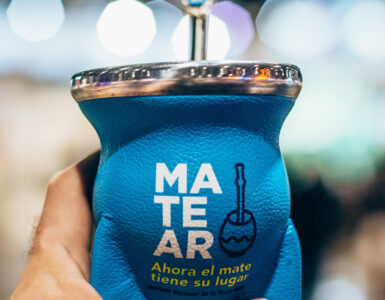
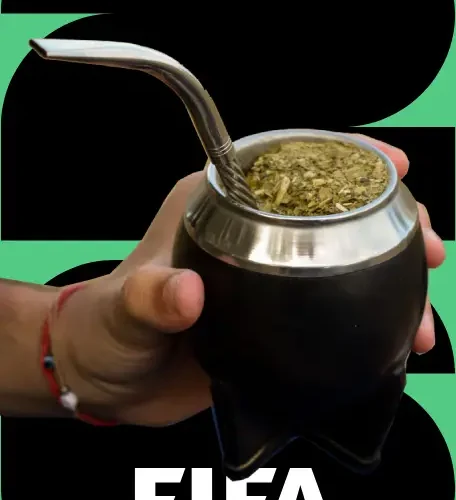
Part of what makes yerba mate such a strong cultural symbol at the World Cup is its variety. Fans from different countries often prefer different vessels and preparation styles — a subtle but meaningful way to identify where someone’s from when supporters meet up before a match. A cultural anthropologist who has studied the tradition extensively keeps a collection of mate cups made from everything from cow horn to cow hoof, alongside hand-stitched leather-wrapped metal cups and classic calabash gourds — a reminder of just how many forms this one tradition can take.
New to Mate? Here’s Where to Start
If the World Cup has you curious about trying yerba mate for the first time, you’re in good company — plenty of newcomers are discovering it at watch parties and cafes across the US this year. Start with our guide on how to make yerba mate the traditional way, then explore the different types of mate gourds and bombillas to find the setup that fits you best. Curious about more than just the ritual? Yerba mate has also drawn scientific interest — Argentine researchers at CONICET have been studying its potential neuroprotective effects, and it’s linked to a number of other health benefits worth knowing about.
Whether you’re cheering for Argentina, Uruguay, or just enjoying the tournament from home, yerba mate has become part of the World Cup 2026 experience — one shared gourd at a time.
Source: Associated Press, June 2026.