 elmateco
When you think of Italy, you picture espresso, cappuccino, wine, limoncello — anything but a round of yerba mate. Yet high in the mountains of Calabria, in southern Italy, there’s a town where mate has been part of daily life for roughly 150 years. It’s called Lungro, and locals proudly call it the “European capital of mate.”
A Town of Just 2,500 People, With a Deep Argentine Habit
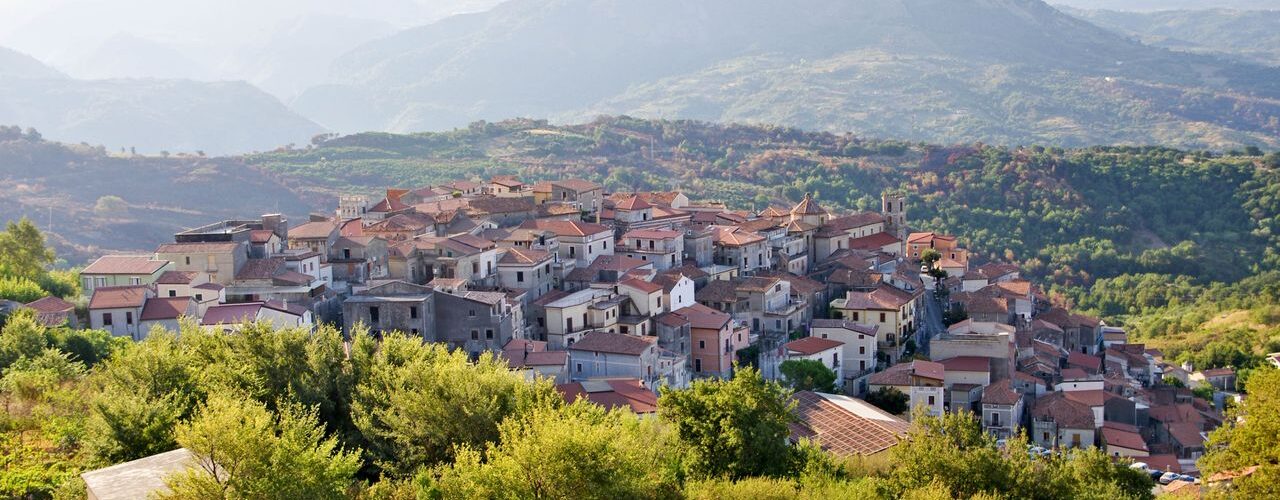
Lungro sits about 600 meters above sea level in the province of Cosenza, home to roughly 2,500 people. What makes it remarkable isn’t just that mate is popular there — it’s that no Argentine community ever settled in the town to bring the tradition with them. The ritual has been passed down through generations of local families since the 19th century, without a single Argentine resident responsible for keeping it alive.
The Arbëreshë Connection: Albanian Roots, Argentine Habits
The explanation lies in Lungro’s unusual migration history. The town belongs to the Arbëreshë community — descendants of Albanians who settled in southern Italy between the 15th and 16th centuries, fleeing the Ottoman expansion in the Balkans. To this day, Lungro’s residents maintain their own language, distinct from standard Italian, alongside their own religious identity: since 1919, the town has been the seat of the Eparchy of Lungro, a Byzantine Catholic jurisdiction for Italo-Albanian communities.
In the late 19th century, many residents of Lungro emigrated to South America, settling in cities like Buenos Aires, Rosario, and Córdoba, along with smaller towns across Argentina’s interior. While there, they picked up the local habit of drinking mate. Some stayed in Argentina permanently. Others eventually returned to Lungro — and brought the custom home with them, first as care packages sent to family back in Calabria: yerba, bombillas, and gourds mailed as gifts in a time when coffee could be hard to come by.
Rather than remaining a curiosity, the habit took root and became part of local identity — passed down through generations until it turned into something the Arbëreshë people made entirely their own.
Their Own Words for Mate
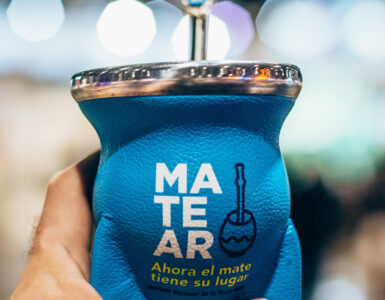
One of the clearest signs of how deeply the ritual embedded itself into Lungro’s culture: locals don’t use the Spanish words for mate equipment. Instead, they use Arbëreshë terms — the gourd is called “kungullo,” the bombilla is “pumbixhiy,” and the kettle used to heat the water is “çikullatera.” The vocabulary itself became part of the local Arbëreshë linguistic tradition, not a borrowed Spanish import.
A Different Ritual Than in Argentina
Mate in Lungro isn’t consumed quite the way it is in Argentina. According to Argentine YouTubers Eduardo Coronel and Noeli Forciniti, who visited the town and documented the tradition, there’s one key difference: “Here, the thermos doesn’t exist. You won’t see anyone drinking mate in the plaza. Mate is drunk inside people’s homes.” Unlike the very public, on-the-go mate culture common across Argentina — where people sip mate while walking, working, or hanging out in parks — in Lungro, the ritual stays private, shared among family and close friends indoors.
An Actual Festival del Mate
Lungro’s connection to mate isn’t just a quiet household habit — it’s celebrated publicly through an annual Festival del Mate, complete with tango and folklore performances by Argentine artists, choripán, and even music from Argentine singer-songwriter Fito Páez. The festival is largely driven by Ana Stratigò, president of the town’s “Academia del Mate,” alongside Karen, a yerba mate sommelier who works to promote the event and the tradition more broadly.
What This Says About Mate’s Global Reach
Lungro joins a growing list of unexpected places where yerba mate has found a permanent home — from Syria’s surprisingly high import numbers to celebrities and athletes across Europe and the US. What makes Lungro’s story especially striking is that the tradition didn’t arrive through direct Argentine immigration at all — it came secondhand, through Albanian-Italian emigrants who picked it up abroad and carried it home, where it became genuinely their own.
Curious about the tradition behind Lungro’s favorite drink? Learn how to make yerba mate the traditional way, or explore the different types of mate gourds used around the world.
Sources: Infobae, Canal26, La Folk Argentina, Minuto Uno.